

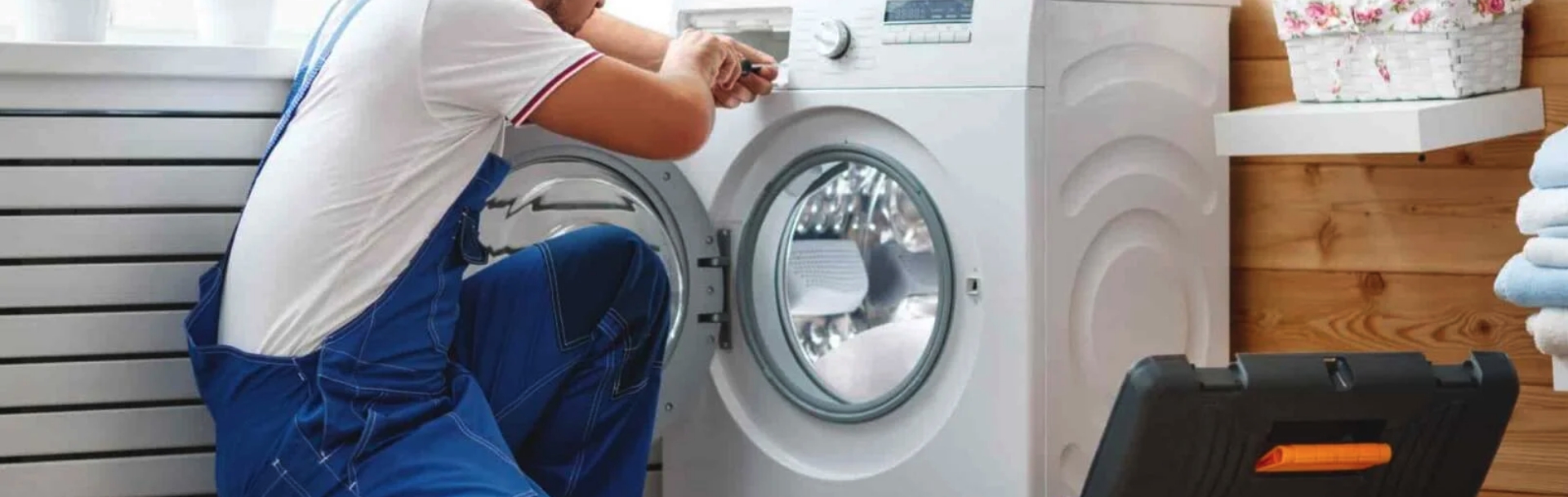


When your washing machine needs repair in Aurora, CO, the disruption hits fast. One stalled load throws off your entire laundry routine — and if the problem doesn’t get addressed quickly, you’re suddenly making trips to the laundromat or piling wet clothes in the bathtub. Most customers who wait too long to call a washer repair service end up dealing with a larger, more expensive problem than the one they started with.
The good news is that not every symptom requires a service call. Some washing machine appliance repair needs are things you can resolve yourself in a few minutes. Others are clear signs that a trained technician needs to step in before the problem gets worse. Here’s how to tell the difference.
Table of Contents
When a Home Appliance Repair Call Is Worth It
Modern washing machines are computer-controlled appliances with dozens of moving parts. When something goes wrong, they’re usually good at flagging it through error codes, unusual sounds, or simply stopping mid-cycle and refusing to continue. The challenge is interpreting those signals correctly.
A washer that stops mid-cycle after a power flicker is a different situation than one that stops mid-cycle every single load. A machine that occasionally vibrates during spin is a different problem than one that sounds like a freight train every time it runs. Context matters, and pattern matters even more.
The sections below walk through the most common warning signs Aurora homeowners encounter, what they typically mean, and what — if anything — you can realistically handle yourself before contacting a washer repair service.
Common Symptoms That Usually Mean You Need a Repair Service
Your Machine Won’t Start or Finish a Cycle
A washer that won’t power on at all is usually an electrical issue — a blown fuse, a faulty door latch preventing the cycle from initiating, or a failed control board. A machine that starts but stops partway through is trickier. This could be a lid switch failure (very common on top-loaders), an overloaded drum, a drainage problem interrupting the cycle, or the motor shutting down due to overheating.
If the machine stops at the same point in every cycle — say, it always quits before the spin — that’s a meaningful pattern. Random stops at different points are harder to diagnose but still almost always indicate a component failure worth having a knowledgeable technician look at.
It’s Making Noises It Never Made Before
There’s a meaningful difference between the normal hum of an agitator working through a heavy load and the sounds that indicate something is breaking. A grinding or scraping noise during wash or agitation usually points to a foreign object caught in the drum or a failing bearing. A loud banging during spin is almost always an unbalanced load — but if redistributing the clothes doesn’t solve it, it can mean a worn shock absorber or suspension rod.
A high-pitched squealing sound, particularly during the spin cycle, is worth taking seriously. On many machines, this points to a worn drum bearing or drive belt. Left unaddressed, a failing bearing will eventually damage the drum itself — turning a straightforward repair into a much costlier problem.
Water Isn’t Draining — or the Machine Is Leaking
Standing water left in the drum after a cycle means the machine didn’t drain. The most common culprits are a clogged drain filter, a blocked or kinked drain hose, or a failing drain pump. Of these, a clogged filter is something you can often address yourself. A failing pump is not.
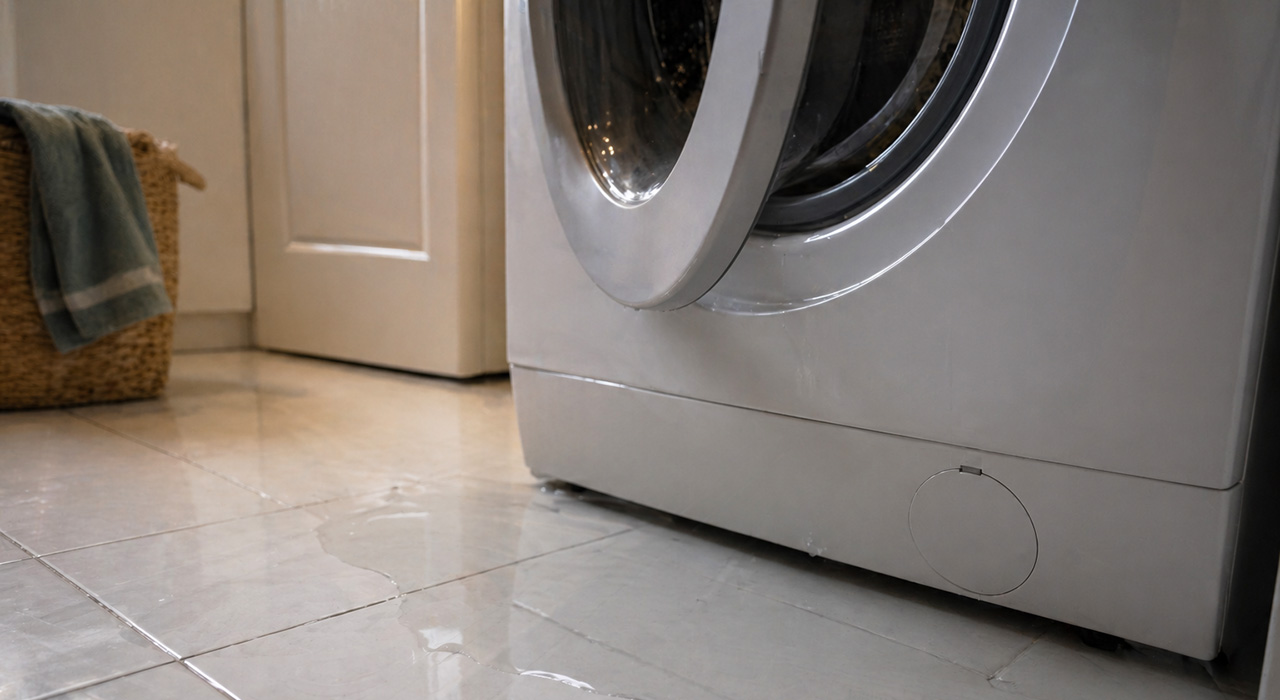
Leaks are a different situation entirely — and one you should address quickly. Water on your laundry room floor can damage subflooring, drywall, and the home appliance itself. Leaks typically originate from the door seal or boot (especially on front-loaders), the inlet hoses, the pump, or the tub-to-pump hose. Pinpointing the source often requires pulling the machine out and running it while watching — which is one reason most Aurora homeowners find it more practical to rely on a pro than to diagnose a leak themselves.
Clothes Are Coming Out Still Soaking Wet
If your clothes finish a cycle dripping wet, the machine isn’t spinning properly — or at all. This is a spin cycle failure, and it’s one of the more disruptive washing machine problems because it makes your laundry routine inefficient and also increases your dryer’s workload and energy costs.
Spin cycle problems often trace back to a failing lid switch or door latch (the machine won’t spin if it thinks the door is open), a worn or broken drive belt, a faulty motor coupling, or a control board issue. Some of these are straightforward replacement parts jobs. Others — particularly motor and control board failures — typically warrant a repair vs. replace conversation, especially on older machines. If you’re also noticing your dryer taking longer than usual to dry clothes, persistently wet laundry coming out of the washer is compounding that problem.
You’re Getting Error Codes You Can’t Clear
Most modern washers display an error code when something goes wrong. These codes aren’t decorative — they’re the machine telling you exactly what system has flagged a fault. An “F21” on a Whirlpool, for instance, points to a drain issue. An “UE” on an LG signals an unbalanced load.
The mistake most customers make is clearing the code without fixing the underlying issue. You can often reset a washer by unplugging it for 60 seconds — and if the code doesn’t return, you may be fine. But if it comes back after a cycle or two, the machine is telling you the problem is still there. At that point, you need an appliance repair technician who can read the full diagnostic data from the machine, not just the error message on the display.
Washer Repair Checks Worth Doing Yourself First in Aurora, CO
Before you schedule a washer repair service, there are a few things genuinely worth doing yourself — not because they’ll solve a mechanical failure, but because they occasionally surface the actual problem or rule out the simple stuff. Appliance repair companies will tell you the same thing: the best first visit is the one where the technician can focus on the real issue, not undo something the homeowner already attempted.
Power cycle the machine. Unplug it, wait 60 seconds, plug it back in. This clears the control board’s memory and can resolve a software glitch or a false error code. It won’t fix anything mechanical, but it takes 60 seconds and costs nothing.
Check the door or lid latch. Washers won’t run — or won’t spin — if the door isn’t fully latched. Make sure nothing is caught in the seal on front-loaders, and that the lid hook on top-loaders is engaging properly.
Redistribute the load. An unbalanced drum causes vibration, noise, and sometimes mid-cycle stops. Open the machine, rearrange the clothes evenly, and try again before assuming something is broken.
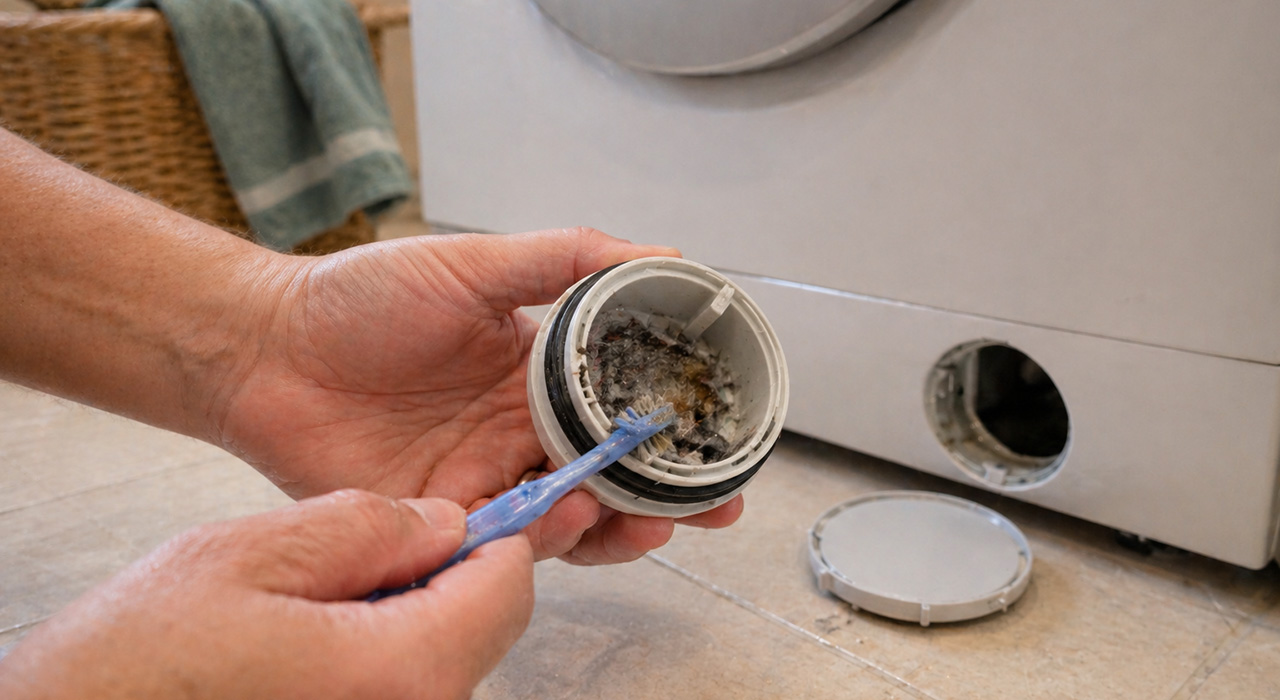
Clean the drain filter. Most front-loading washers — and some top-loaders — have a small filter near the base of the machine, behind a small access panel. It catches coins, lint, and debris, and a clogged filter will cause drainage problems and mid-cycle stops. Your owner’s manual will tell you where it is and how to clean it. For general home appliance maintenance guidance, Energy Star’s appliance care resources are a useful reference.
Check the water supply valves. If the machine is filling slowly or not at all, check that the hot and cold supply valves behind the unit are fully open. Also inspect the inlet screens — small mesh filters inside the hose connections — for mineral buildup, which is common in areas with hard water. For model-specific troubleshooting, manufacturer support pages from Whirlpool, LG, and others provide expert advice and step-by-step guidance before you contact a repair service.
When to Call for Aurora Appliance Repair
The checks above are worth doing. But there’s a category of washing machine problems where attempting a DIY fix isn’t just unlikely to work — it can make the repair work more expensive and complicate what should be a straightforward job.
Contact an appliance repair technician if you’re seeing any of the following:
A burning smell coming from the machine during or after a cycle. This is not a normal operating smell. It usually indicates an overheating motor, a failing drive belt, or an electrical component in distress. Stop using the machine immediately.
Water on the floor that you can’t trace to a loose hose connection. Leaks from the pump, tub, or door boot require diagnosis with the machine running — and often require disassembly. Letting a leak continue puts your flooring, subfloor, and home at risk.
The drum isn’t moving during the wash or spin cycle. You can hear the motor engage, but nothing turns. This typically points to a broken drive belt, a failed motor coupling, or a motor failure — none of which are DIY repairs, and all of which require genuine replacement parts to fix properly.
Recurring error codes that return within a cycle or two of being cleared. The machine is telling you something is genuinely wrong.
If any of those match what you’re dealing with, the right move is to schedule service with a washer repair service in Aurora that can diagnose the problem accurately and fix it on the first visit — not a series of attempted workarounds that push the job down the road.
Aurora Appliance Repair Service for All Major Appliance Brands
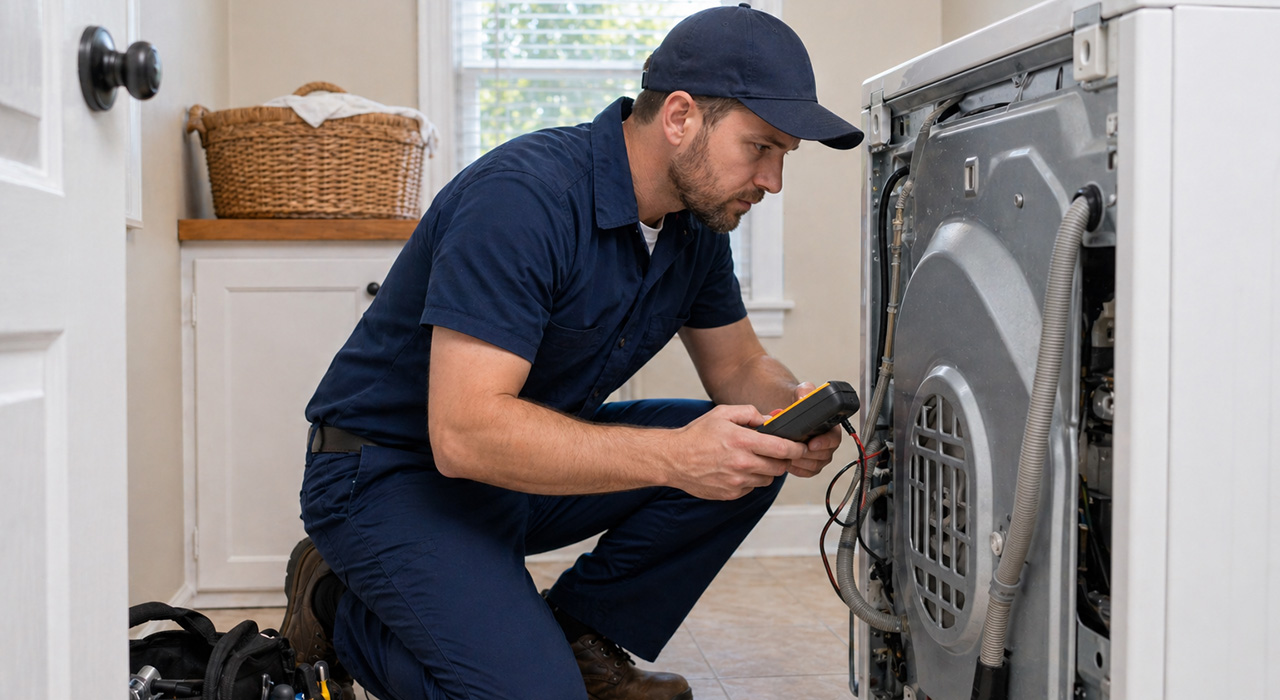
Appliance Repair Emporium has been providing appliance service to Aurora, CO homeowners and the surrounding Denver metro since 2008. That’s not a marketing line — it’s 15-plus years of hands-on repair work on the machines that people in this area actually own, in the homes they actually live in.
As a factory-authorized appliance service provider, the technicians here are trained and certified across all major appliance brands: Whirlpool, Maytag, LG, Samsung, GE, Frigidaire, KitchenAid, Kenmore, Electrolux, and others. Factory authorization means access to genuine OEM replacement parts and the brand-specific diagnostic training that comes with it — not generic parts and guesswork. That distinction matters when the machine is expensive and the repair needs to last.
Beyond washers, the team handles stoves, ovens, dishwashers, refrigerators, and other kitchen appliances. If it’s a major home appliance and it’s not working, Appliance Repair Emporium can handle it. The same reliable service, the same team, the same location serving Aurora and the surrounding area.
Every repair comes backed by a labor warranty. Fair pricing, no hidden charges, and free estimates are standard — because customers deserve to know what the job costs before work begins. Appliance repair technicians arrive promptly for same-day and next-day appointments across Aurora, Centennial, Parker, Highlands Ranch, Littleton, Englewood, and Denver. The goal is simple: fix the problem quickly, get your home running smoothly, and make the process as convenient as possible from start to finish.
Many appliance repair companies in Aurora, CO, offer warranties on their services, typically ranging from 90 days to one year for parts and labor.
To schedule service or get expert advice on whether your machine is worth repairing, call (303) 369-8888 or visit appliancerepairemporium.com. The team takes pride in providing fast, reliable appliance repair — and doing the job right the first time.
Repair or Replace? A Quick Guide for Home Appliance Decisions
When your washing machine needs significant repair work, it’s worth asking whether the job makes financial sense in the long run. The most reliable benchmark is the 50% rule: if the repair estimate exceeds 50% of what a comparable new machine would cost, replacement is usually the smarter move — especially on machines that are more than 8–10 years old. Consumer Reports’ appliance reliability data can help you understand how your specific brand and model tend to hold up over time.
If your machine is under 8 years old and the repair is a straightforward component swap — a door latch, a drain pump, a drive belt — repair almost always makes sense. You’ll save money compared to replacement, and a well-maintained washer has years of efficient use ahead of it.
The harder calls are machines in the middle range: 7–10 years old, multiple issues, unclear costs. A knowledgeable technician who gives you an honest assessment — not just a repair estimate — is worth more than any rule of thumb. Energy Star’s appliance efficiency resources are also useful if energy costs factor into your decision. Older, inefficient machines can cost more to run than a newer, efficient replacement — and that matters in the long run.
One thing worth noting: if your washer has a history of multiple repairs over the past few years, that pattern matters. An ice maker that fails once is usually worth fixing. An ice maker — or a washer — that’s been in the shop three times in two years is telling you something about its overall reliability. A technician who’s honest about that picture is the kind of partner you want to rely on.
Frequently Asked Questions
How do I know if my washing machine needs repair or just a reset?
If a power cycle — unplugging the machine for 60 seconds — clears the issue and it doesn’t return, a reset may have been enough. But if the problem comes back within a cycle or two, or if you’re seeing physical symptoms like leaking, grinding noise, or a drum that won’t move, your washer needs repair. Recurring issues almost always indicate a component failure that a reset won’t fix.
What are the most common washing machine problems appliance repair technicians see?
The most frequent issues are drain pump failures, worn or broken drive belts, faulty lid switches or door latches, clogged drain filters, and control board faults. Water inlet valve failures and bearing wear are also common on machines that are 7 or more years old. Most of these are straightforward replacement parts jobs when caught early.
How long does a washer repair service visit take?
Most repairs are completed in a single visit, typically within an hour or two once the technician has diagnosed the problem and has the right part on hand. If a specific part needs to be ordered, a return visit is scheduled — but the initial service call is usually same-day or next-day for customers in Aurora, CO and the surrounding area.
Does Appliance Repair Emporium provide washer repair for all major appliance brands?
Yes. As a factory-authorized home appliance repair service, Appliance Repair Emporium services all major appliance brands, including Whirlpool, LG, Samsung, GE, Maytag, Frigidaire, Kenmore, KitchenAid, and Electrolux. Factory authorization means brand-specific training and access to genuine OEM replacement parts — not aftermarket substitutes.
Does Appliance Repair Emporium offer same-day Aurora appliance repair service?
Yes. Same-day and next-day appointments are available throughout Aurora, CO and the surrounding Denver metro area, including Centennial, Parker, Highlands Ranch, Littleton, and Englewood. Technicians arrive promptly and provide fast, efficient service to get your home running smoothly again. Call (303) 369-8888 to schedule service or visit appliancerepairemporium.com to contact the team directly.